


Last Updated: October 25, 2026
Quick Summary
Refillable cleaners reduce plastic waste by letting you keep one durable atomizer and replenish it with refill bottles, cutting plastic consumption dramatically while maintaining cleaning power. Beyond the environmental benefits, refillable cleaners often deliver better long-term value as the cost per use drops significantly after your initial purchase.
- A family using conventional cleaners might discard dozens of plastic containers annually, while refillable cleaners eliminate that cycle.
- Conventional spray bottles cost $3-6 per unit with annual usage of 8-12 bottles, while refillable starter kits cost $40-90 upfront.
- A single refill bottle typically lasts 2-4 months depending on household size and usage frequency.
- Refillable cleaners often feature non-toxic formulations like hypochlorous acid that fight germs without harsh chemicals or bleach.
- Start with a starter kit that includes both the atomizer and first refill to ensure compatibility from day one.
Table of Contents
- Why Switch to Refillable Cleaners
- Understanding Refillable Cleaning Products
- How Refill Systems Work
- Real Cost Savings From Cleaning Product Refills
- Key Benefits of Refillable Cleaners
- Safety, Dilution, and What You Need to Know
- Starting Your Refillable System Today
- Frequently Asked Questions
Why Switch to Refillable Cleaners
Switching to refillable cleaners addresses a tension most households face: balancing effective germ protection with reducing the plastic waste that accumulates under the sink. The shift toward refillable cleaning products isn't just about environmental responsibility, it's about rethinking how you approach household hygiene altogether.
Single-use plastic bottles pile up quickly. A family using conventional cleaning products might discard dozens of plastic containers annually. Refillable cleaners eliminate that cycle. You keep one durable atomizer and replenish it with refill bottles or concentrates, cutting plastic consumption dramatically while maintaining the same cleaning power.
Beyond the environmental case, refillable cleaners often deliver better value over time. The upfront investment in a quality atomizer and initial refill costs more than grabbing a bottle of conventional cleaner off the shelf. But the cost per use drops significantly after the first purchase, especially when you calculate usage over months and years. For families committed to reducing household waste, this transition offers long-term value.
The real question isn't whether refillable cleaners work, it's whether the convenience and savings justify the initial shift in your routine. Most households find the answer is yes, particularly when they start with a system designed for ease of use rather than one that requires complicated mixing or dilution steps.
Understanding Refillable Cleaning Products
Refillable cleaners are cleaning solutions packaged in concentrated or ready-to-use forms designed for repeated refilling into a reusable atomizer or dispenser. Rather than discarding the entire bottle when empty, you purchase only the cleaning liquid as a refill, keeping the spray mechanism indefinitely.
These products come in several formats. Some arrive as ready-to-use liquids that pour directly into your atomizer, no mixing required. Others come as concentrates that you dilute with water at home, stretching the product further and reducing shipping weight.
The key difference between refillable and conventional cleaners lies in the packaging philosophy. Traditional cleaning products bundle the spray mechanism with each bottle, creating waste every time you empty it. Refillable systems separate the durable component (the atomizer) from the consumable (the liquid), letting you reuse the expensive part indefinitely.
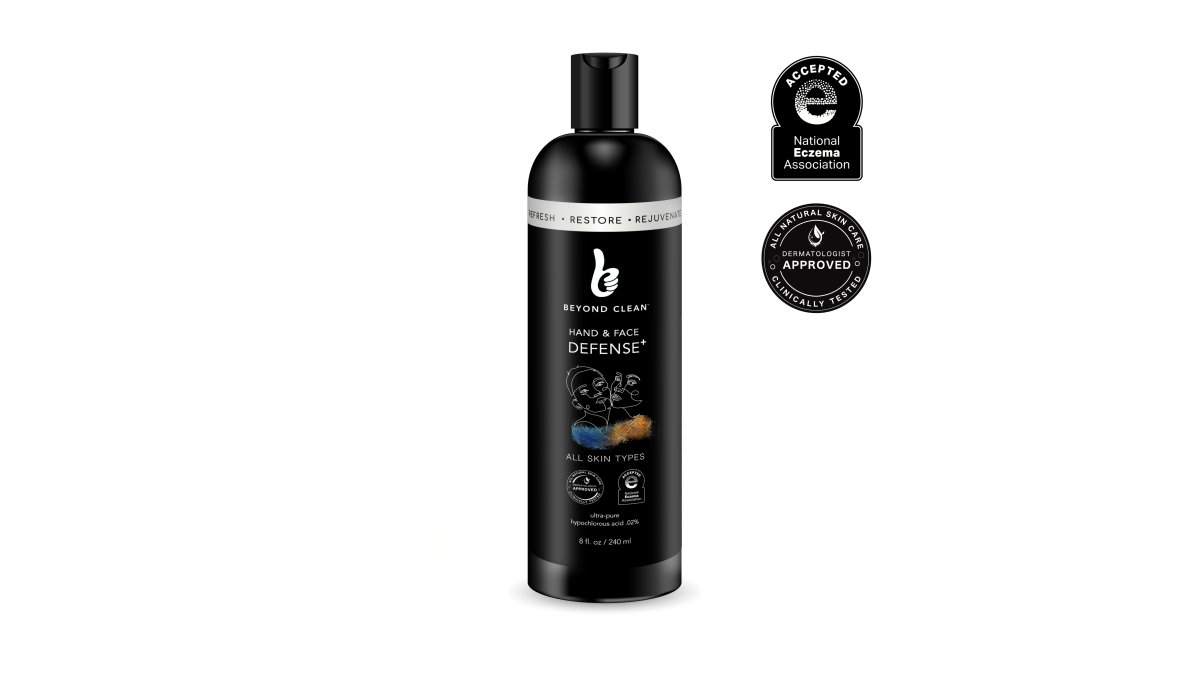
At Beyond Clean, we've designed our refillable atomizer system to make this transition seamless. The Hand & Face Defense+ refill format works with our reusable atomizer, eliminating the need to replace the entire bottle. You're purchasing only the cleaning solution, not the plastic spray pump you'll throw away.
Quality matters here. Look for atomizers with fine-mist mechanisms that don't require excessive pressure, durable materials that withstand daily use, and designs that actually feel good in your hand. Environmental Protection Agency guidance on household chemical safety emphasizes that proper storage and handling of cleaning products extends their effectiveness and safety.
Explore Non Toxic Kitchen Surface Cleaner: 7 Top Picks to understand the range of refillable options available and find formats that match your household's specific needs.
How Refill Systems Work
The mechanics of a refill system are straightforward, but understanding them helps you choose the right setup for your home. Most systems follow a simple pattern: you own the atomizer permanently, and you purchase refills as needed.
Step 1: Purchase the starter kit. This includes a reusable atomizer (the spray bottle mechanism) and your first refill. For Beyond Clean, the Hand & Face Defense+ Refill + Atomizer 3.4/8 OZ gives you everything needed to start immediately, no additional purchases required.

Step 2: Use the product normally. Fill your atomizer, spray as needed, and use it like any conventional cleaner. The refill bottle stays stored safely until you need it.
Step 3: Refill when empty. When the atomizer runs dry, pour the refill liquid into it. No rinsing or complicated steps, just pour and go. The atomizer itself lasts through dozens of refills.
Step 4: Purchase additional refills. Once your starter refill is depleted, you buy only the refill bottle, not a new atomizer. The Hand & Face Defense+ Refill arrives ready to use, cutting both cost and packaging waste.

Some systems add complexity with concentrate-based refills that require dilution. You mix the concentrate with water at specific ratios to create your cleaning solution.
At-home refill shops represent another model gaining traction. You bring your empty atomizer to a retail location, they fill it from bulk containers, and you leave with a full bottle.
The simplest systems, like Beyond Clean's refillable format, skip the complexity. You purchase pre-filled refill bottles, pour them into your atomizer, and move on.
Real Cost Savings From Cleaning Product Refills
The financial case for refillable cleaners hinges on math that most people don't calculate until after they've switched. Initial costs appear higher, but cost per use tells the real story.
A conventional spray bottle of household cleaner typically costs between $3 and $6 per unit. If your household uses 8-12 bottles annually, that's roughly $24-72 per year on the product alone, plus the environmental cost of disposing the plastic packaging.
A refillable system requires upfront investment. A quality atomizer and initial refill require an upfront investment. This initial outlay might be $40-90 for the starter kit.
But the calculation changes after the initial purchase. A single refill bottle typically lasts 2-4 months depending on household size and usage frequency.
The advantage compounds over time. After year one, you've already purchased your atomizer. Years two, three, and beyond involve only refill costs.
For families with multiple bathrooms or high cleaning demands, the savings accelerate. One atomizer can serve a household's needs indefinitely. This scales the efficiency of your refillable system. (Source: consumer preferences for sustainable products)
The real savings, however, come from behavior change. Households that switch to refillable cleaners often reduce overall consumption. They're more intentional about when they clean, less likely to buy multiple specialty products for different surfaces, and more conscious of waste.
Here's how refillable cleaners compare financially to conventional cleaning products over time.
| Item | Cost | Note |
|---|---|---|
| Conventional spray bottle | $3-6 per unit | Annual usage of 8-12 bottles |
| Annual conventional cleaner cost | $24-72 | Plastic packaging disposal included |
| Refillable starter kit | $40-90 | Atomizer plus initial refill |
| Single refill bottle | Lower per-unit cost | Lasts 2-4 months depending on usage |
| Year two and beyond | Refill costs only | Atomizer already purchased |
| Five-year savings | Significant | Compared to buying new bottles annually |
Key Benefits of Refillable Cleaners
The environmental case for refillable cleaners extends beyond reducing plastic bottles in your trash.
Packaging waste represents a genuine problem in household cleaning. The average American household discards many plastic containers annually. Most never get recycled, they end up in landfills where they persist for centuries. Refillable systems don't eliminate packaging entirely, but they reduce it dramatically.
Shipping emissions can be reduced when you purchase refills instead of full bottles. A refill bottle weighs less and takes up less space than a complete spray bottle with mechanism. Lighter shipments can mean lower transportation emissions per unit.
Beyond the environmental angle, refillable cleaners often feature formulations designed for safety and gentleness. Our Hand & Face Defense+ uses hypochlorous acid, a naturally occurring compound that fights germs without the irritation of alcohol-based sanitizers or bleach-based cleaners (Hypochlorous Acid: A Review).
For households with infants, young children, or family members with sensitive skin, this matters. Conventional cleaning products often contain ingredients that irritate skin or create respiratory concerns. Refillable systems marketed toward health-conscious consumers typically avoid these compounds.
The convenience factor, once you establish the routine, becomes underrated. No more shopping trips specifically for cleaning supplies. No more cluttered under-sink cabinets storing a dozen half-empty bottles. One atomizer, refilled as needed, simplifies your cleaning routine and your storage needs.
Safety, Dilution, and What You Need to Know
The shift to refillable cleaners introduces questions about dilution, product compatibility, and safe handling that conventional cleaners don't typically raise. Understanding these prevents mistakes that could reduce effectiveness or create safety issues.
Concentrate-based refills require correct dilution ratios. Too much concentrate, and you waste product and potentially create an overly harsh solution. Too little, and cleaning performance suffers. Always follow the manufacturer's dilution instructions precisely. A kitchen scale or marked measuring cup ensures accuracy.
Product compatibility matters when you're reusing atomizers. Not all cleaning solutions work with all spray mechanisms. Some concentrates can damage certain plastics or rubber seals over time.
For households with food preparation surfaces, the question of safety around kitchen cleaners becomes critical. Beyond Clean's Hand & Face Defense+ is formulated for use on skin and surfaces, making it appropriate for kitchen areas where food contact occurs.
Storage of refill bottles requires the same care as conventional cleaners. Keep them out of reach of children and pets, store in cool dry locations away from direct sunlight, and never mix different cleaning products. Mixing creates chemical reactions that can be dangerous and ineffective.
The concentration of active ingredients in your refill determines cleaning power. A properly diluted concentrate should perform identically to a ready-to-use refill. If you notice reduced effectiveness, check your dilution ratio before assuming the product itself is weak.
Starting Your Refillable System Today
Making the switch requires deciding which format matches your household's needs and committing to the initial purchase. Most families find the transition easier than expected once they've established the routine.
Begin with a starter kit that includes both the atomizer and your first refill. This eliminates the decision paralysis of buying components separately and ensures compatibility from day one.
If you already own a reusable atomizer in good condition, you can start with just a refill bottle.
Establish a refill schedule based on your household's usage. Track how long a refill lasts under your normal cleaning routine. Most households refill monthly or quarterly.
Store refill bottles in an accessible location but away from children and pets. A cabinet under the kitchen sink works for most households, provided it's dry and cool.
Consider starting with one refillable cleaner for your most-used cleaning task, hand and face hygiene, kitchen surfaces, or bathroom cleaning. Once that system becomes routine, expand to other cleaning needs.
Switching to refillable cleaners represents a meaningful shift in how your household approaches both hygiene and environmental responsibility.
Frequently Asked Questions
Are refillable cleaners as effective as conventional cleaners?
Yes. Refillable cleaners like those powered by hypochlorous acid (HOCl) are dermatologist-tested and clinically proven to sanitize effectively without harsh chemicals. The key is using the correct dilution ratio and allowing proper contact time on surfaces. Many households find refillable options outperform conventional sprays because they're gentler yet still eliminate germs, making them ideal for homes with children, pets, or sensitive skin.
How much money do refillable cleaners actually save over time?
Cost savings depend on your refill format and usage. A starter kit like the Hand & Face Rescue Kit ($49.99) with 8oz refills ($39.99) costs roughly $0.50 per refill for hand and face sanitization, significantly less than single-use bottles. For households using refillable systems across multiple surfaces, annual savings can be realized compared to buying conventional cleaners monthly. The upfront investment offers long-term value for most families.
Is hypochlorous acid safe to use around children and food preparation surfaces?
Hypochlorous acid (HOCl) is food-safe and widely used in food processing and healthcare settings. It's naturally produced by your body's white blood cells and breaks down into salt and water, leaving no harmful residue. For children, use only formulas labeled dermatologist-approved and alcohol-free, like those certified by the National Eczema Association. Always follow dilution instructions and allow surfaces to air-dry before food contact.
What makes Beyond Clean different from other refillable hygiene brands?
Beyond Clean uses pure hypochlorous acid (HOCl) in a dermatologist-approved, fragrance-free formula designed for sensitive skin. Unlike alcohol-based alternatives, it won't dry out hands or irritate eczema-prone skin. The refillable atomizer system is specifically engineered for both personal and household use, and the formula is clinically tested and holds the National Eczema Seal of Acceptance. The focus is on transparency, effectiveness, and reducing single-use plastic waste without compromise.


