Table of Contents
- Why Cleaning Baby Surfaces Requires a Different Approach
- How to Sanitize Surfaces Without Bleach: Safe Alternatives for Nurseries
- Safe Disinfectant for Baby Toys: Materials and Methods
- Cleaning High Chairs and Feeding Gear Step by Step
- Cleaning Baby Gear Schedule: Routine vs. Deep Cleaning
- Cleaning Soft Surfaces and Fabric in the Nursery
- Common Mistakes to Avoid When Cleaning Baby Surfaces
- Frequently Asked Questions
Last Updated: September 20, 2026
Why Cleaning Baby Surfaces Requires a Different Approach
Babies have immature immune systems and thinner, more permeable skin that absorbs chemicals easily and reacts strongly to irritants, which is why clean baby surfaces requires a different approach than standard household cleaning. Standard household cleaners pose real risks to infant health.
The solution is to clean smart, using methods and products specifically designed for vulnerable skin and developing bodies.
Common disinfectants linger on surfaces and get absorbed through a baby's hands, mouth, and skin. Bleach releases irritating fumes; alcohol dries delicate skin. Choosing the right approach matters.
How to Sanitize Surfaces Without Bleach: Safe Alternatives for Nurseries
Non-bleach alternatives eliminate germs effectively while keeping your nursery safe from chemical exposure.
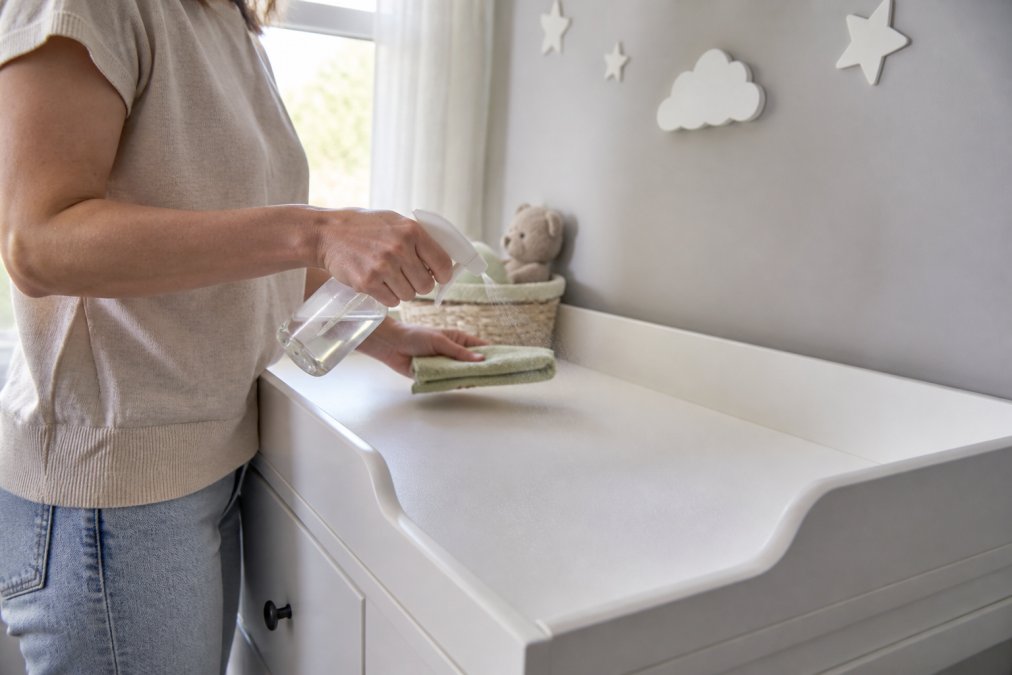
Several safe options exist for sanitizing baby surfaces:
- Hypochlorous acid solutions (medical-grade, non-toxic)
- Diluted white vinegar (natural, antimicrobial)
- Mild dish soap and water (effective for routine cleaning)
- Steam cleaning (chemical-free sanitization)
Hypochlorous Acid: A Medical-Grade Alternative
Hypochlorous acid (HOCl) is what your body's white blood cells naturally produce to fight infection, making it inherently safe for human contact.
Diluted White Vinegar and Mild Dish Soap Solutions
White vinegar is a natural antimicrobial that becomes a gentle yet effective cleaner when diluted.
Basic vinegar cleaning solution:
- Mix one part white vinegar with three parts water
- Pour into a spray bottle
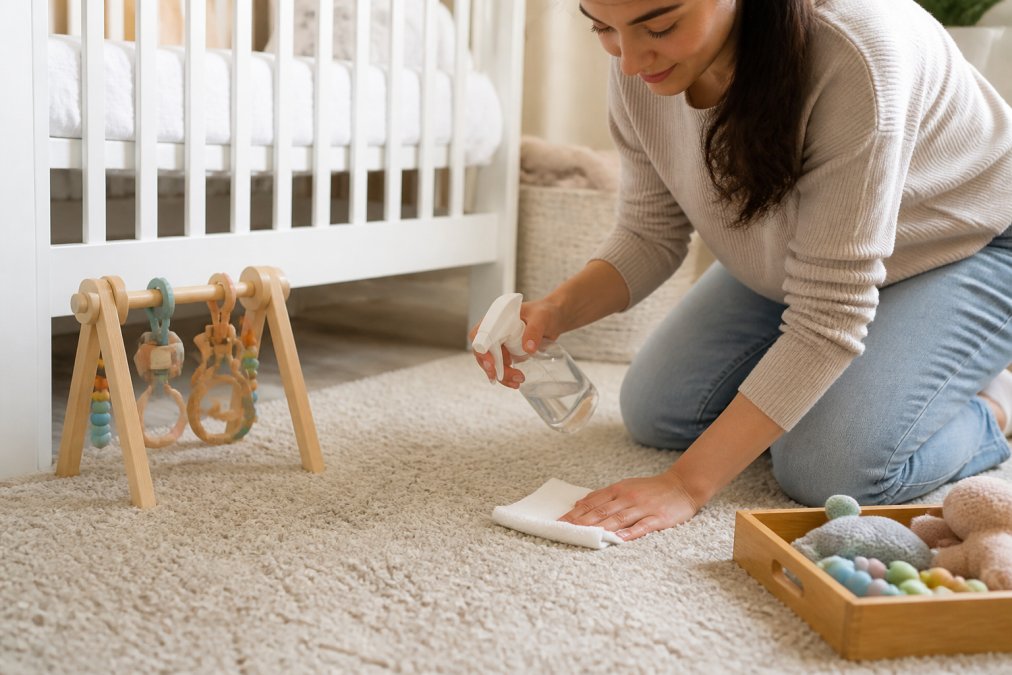
- Spray on surfaces and wipe with a clean cloth
- Works well on non-porous surfaces like changing tables and crib rails
Safe Disinfectant for Baby Toys: Materials and Methods
Baby toys require different cleaning approaches by material. Toys that go in the mouth need extra care since babies ingest whatever residue remains.
Plastic and Rubber Toys
For routine cleaning:
- Wash with mild dish soap and warm water
- Use a soft brush to reach crevices
- Rinse thoroughly under running water until soap is completely gone
- Air dry on a clean towel
For deeper sanitization:
- Soak toys in a hypochlorous acid solution for 5-10 minutes
- Rinse multiple times with clean water
- Air dry completely before returning to baby
Teething Toys and Silicone Products
Teething toys and silicone products need gentler handling since babies chew on them intensely and residue gets directly into the mouth.
Safe cleaning method:
- Wash with mild dish soap and warm water
- Scrub gently with a soft cloth
- Rinse 2-3 times to ensure all soap is removed
- Soak in a hypochlorous acid solution if deeper sanitization is needed
- Final rinse with clean water
- Air dry completely
Cleaning High Chairs and Feeding Gear Step by Step
High chairs are germ magnets where food traps in crevices and bacteria multiply in warm, moist environments. A systematic approach prevents buildup.
Non-Porous Surfaces and Trays
Daily wipe-down routine:
- Remove large food debris with a dry cloth
- Spray the entire tray with a mild cleaning solution (dish soap and water, or diluted vinegar)
- Wipe thoroughly with a clean cloth
- Dry with a second cloth to prevent water spots
- Check crevices where the tray connects to the chair
Weekly deep clean:
- Remove the tray completely
- Wash with warm soapy water and a soft brush
- Spray with a hypochlorous acid solution and let sit for 5 minutes
- Rinse thoroughly and air dry
- Wipe down the entire chair frame, paying attention to seams and joints
Use a soft-bristled brush to reach crevices where the tray meets the base and where the seat connects to the back.
Fabric Straps and Soft Furnishings
Cleaning fabric straps:
- Check the manufacturer's care instructions first
- Most high chair straps can be hand-washed in warm, soapy water
- Scrub gently with a soft brush
- Rinse multiple times until all soap is gone
- Air dry completely (never use a dryer, which can damage the fabric)
- If straps are removable, wash separately in the sink
For deeper sanitization, spray straps lightly with a hypochlorous acid solution and let air dry.
Cinagro™ Pro Surface Defense →
Cleaning Baby Gear Schedule: Routine vs. Deep Cleaning
Regular cleaning prevents bacteria buildup more effectively than intense occasional sanitization.
Daily Wipe-Down Routine
Daily cleaning focuses on surfaces your baby touches most and areas where food and saliva accumulate.
What to clean daily:
- High chair tray and seat
- Changing table surface
- Crib rails (where baby's hands and mouth contact the wood)
- Doorknobs and light switches in the nursery
- Toys that go in the mouth
How to do it:
- Use a mild soap and water solution or diluted vinegar
- Spray or wipe each surface
- Dry with a clean cloth
- Takes 10-15 minutes total
Weekly Deep Cleaning Protocol
Weekly deep cleaning targets surfaces that don't get daily attention but accumulate dust and bacteria over time.
What to deep clean weekly:
- All hard surfaces in the nursery (dresser, shelves, window sills)
- Soft toys that aren't mouthed frequently
- Crib mattress surface (spray lightly and wipe down)
- Baseboards where dust collects
- Closet shelves and storage areas
How to do it:
- Use a hypochlorous acid sanitizer for maximum germ elimination
- Spray surfaces and let sit for 5-10 minutes
- Wipe thoroughly
- Allow to air dry
- Takes 30-45 minutes for a full nursery
Post-Illness Sanitization
Post-illness sanitization reduces reinfection risk and prevents spreading illness to other family members.
What to sanitize after illness:
- All toys the baby touched while sick
- Crib sheets, mattress pad, and blankets
- High chair tray and straps
- Changing table surface
- Doorknobs and light switches
- Any stuffed animals or soft toys in the crib
How to sanitize:
- Wash soft items in hot water with mild detergent
- Spray hard surfaces with a medical-grade sanitizer like Cinagro™ Pro Surface Defense
- Let the sanitizer sit for 10 minutes
- Wipe thoroughly and air dry
- Wash your hands after cleaning
| Cleaning Type | Frequency | Time Required | Focus Areas |
|---|---|---|---|
| Daily wipe-down | Every day | 10-15 minutes | High chair, changing table, frequently touched surfaces |
| Weekly deep clean | Once per week | 30-45 minutes | All hard surfaces, soft toys, shelves, baseboards |
| Post-illness sanitization | As needed | 45-60 minutes | All toys, soft furnishings, high-touch surfaces |
Cleaning Soft Surfaces and Fabric in the Nursery
Soft surfaces harbor bacteria differently than hard surfaces because fabric is porous and germs hide deep inside, requiring methods that penetrate the material.
Crib Sheets and Mattress Pads
Washing crib sheets:
- Use hot water to kill bacteria
- Wash with mild, fragrance-free detergent
- Use a gentle cycle to avoid damaging the fabric
- Dry on low heat or air dry
- Never use fabric softener, which can irritate sensitive skin
For the mattress pad, spray lightly with a hypochlorous acid solution and let air dry completely before putting on fresh sheets.
Stuffed Animals and Soft Toys
For washable stuffed animals:
- Check the care label first
- Most can be washed in a mesh bag on a gentle cycle with mild detergent
- Use warm water, not hot
- Air dry completely, never use a dryer
- Once dry, spray lightly with a hypochlorous acid solution if deeper sanitization is needed
For non-washable stuffed animals, spray lightly with a sanitizing solution and let air dry for at least 30 minutes.
Common Mistakes to Avoid When Cleaning Baby Surfaces
Parents often make well-intentioned mistakes that either fail to sanitize effectively or expose babies to unnecessary chemical risks.
Frequently Asked Questions
What cleaners are safe to use around babies?
The safest cleaners for baby surfaces are those made from non-toxic, non-irritating ingredients like hypochlorous acid (HOCl), diluted white vinegar mixed with mild unscented dish soap, or plain water with a microfiber cloth. Avoid bleach, ammonia, phenol, and products with artificial fragrances or alcohol. Look for products labeled dermatologist-approved and hypoallergenic. Products like Cinagro™ Pro Surface Defense use medical-grade hypochlorous acid that eradicates 99.99% of bacteria, fungi, and viruses without harsh chemicals or PPE requirements.
How often should I sanitize high-touch baby surfaces?
Daily wipe-downs of high-touch surfaces like changing tables, crib rails, and high chair trays prevent germ buildup. Weekly deep cleaning covers less-touched areas. After illness, sanitize all surfaces immediately and again 48 hours later. For food-contact surfaces like feeding trays, sanitize after each use. Routine maintenance reduces allergen buildup and limits chemical exposure compared to sporadic heavy sanitization.
Is hypochlorous acid safe for baby surfaces and skin?
Yes. Hypochlorous acid (HOCl) is a naturally occurring compound produced by white blood cells to fight infection. Medical-grade formulas like Cinagro™ Pro are non-toxic, non-irritating, and hypoallergenic, making them safe for all living environments including nurseries. They require no PPE and are safe on hard surfaces, soft furnishings, and food-contact areas. Clinical testing and dermatologist approval confirm safety for sensitive and eczema-prone skin, unlike alcohol-based sanitizers that can cause dryness.
Can I use the same cleaning solution on baby toys as on nursery surfaces?
Yes, but application matters. Hypochlorous acid solutions and diluted vinegar work on both toys and surfaces. For toys babies mouth, spray the solution, let it sit briefly, then rinse thoroughly with clean water and air dry to prevent residue. Plastic and rubber toys tolerate these solutions well. For delicate items like teething toys or silicone products, avoid soaking; instead spray and wipe with a damp cloth, then air dry completely to maintain material integrity.


