

Last Updated: November 20, 2026
Quick Summary
Refillable hygiene is worth the investment when you refill often enough to clear the break-even point before the dispenser or formula gives out. Refills usually win on cost per use, but only if you finish the refill before it degrades and actually reuse the container. Run the four-step cost comparison with your own prices and refill cadence to confirm the savings.
- A $12.00 dispenser against a $0.125-per-ounce savings on a 32-ounce refill breaks even after about three refills.
- Empty the dispenser completely before refilling, and let it air-dry before refilling.
- Retire a dispenser with cracks, a pump that no longer seals, persistent odor, or visible mold.
- Never top off a partly full bottle with fresh liquid; empty, clean, then refill.
- The Hand & Face Defense+ Refill + Atomizer bundle costs $34.99 and pairs the reusable atomizer with the formula.
Table of Contents
- The Real Cost of Refillable Hygiene Systems
- Refill Packs vs. New Bottles: What You Actually Pay
- The Cost of Refillable Products Over a Full Year
- How Refillable Cleaning Products Compare on Effectiveness
- Hygiene Risks and Safe-Use Rules for Refill Systems
- How to Reduce Plastic Waste at Home Without Extra Effort
- Build Your Refill Starter Setup with Beyond Clean
- Frequently Asked Questions
The Real Cost of Refillable Hygiene Systems
Refillable hygiene is a system where you buy a durable dispenser once and replenish it with concentrated or bulk refills instead of tossing a whole bottle every few weeks. The investment question comes down to three numbers: what you pay upfront, what each refill costs, and how long the hardware lasts. Families often ask whether the math actually works, so this guide walks through it. (Source: Environmental Protection Agency's data on municipal solid waste)
Here is the honest answer. Refills usually win on cost per use, but only if you finish the refill before it degrades and you actually reuse the container. Buy a refill system and forget about it, and the savings evaporate.
The upfront cost is the part that stops most people. A reusable atomizer plus your first fill typically costs more upfront than a single drugstore bottle. But the comparison only makes sense over months, not one purchase.
| Cost Factor | Refill System | New Bottle Each Time |
|---|---|---|
| Upfront cost | Higher (dispenser + first fill) | Lower (single bottle) |
| Cost per use over time | Lower | Higher |
| Packaging thrown away | Minimal after setup | Every bottle |
| Break-even point | After several refill cycles | Never (no reusable hardware) |
Refill Packs vs. New Bottles: What You Actually Pay
A refill pack can be the cheaper unit, because a new bottle carries the cost of the container, the pump, the label, and the shipping weight, while a refill skips most of that.
But refills are not automatically cheaper per ounce, and the only way to know is to run the division yourself. Here is the method we use, with a worked example you can copy.
Step 1: Price per ounce of the product. Divide the shelf price by the net weight in ounces. A 16-ounce bottle at $8.00 is $0.50 per ounce. A 32-ounce refill pouch at $12.00 is $0.375 per ounce. On liquid alone, the refill wins by about 25%.
Step 2: Add the container cost. A reusable dispenser is a one-time cost. If a dispenser costs $12.00 and you refill it 12 times a year, the container adds $1.00 per refill in year one and $0.00 in year two. Spread over a three-year life, the container cost per refill drops to roughly $0.33. That is the number most comparisons leave out.
Step 3: Compare total cost per use, not per ounce. If a bottle lasts a household three weeks and a refill lasts six, the refill path needs half as many purchases per year. Multiply purchases by unit price, add the one-time dispenser cost, and compare the 12-month totals side by side.
Step 4: Check the break-even point. Break-even is the number of refill cycles it takes for the dispenser cost to be absorbed by the per-ounce savings. With the numbers above, a $12.00 dispenser against a $0.125-per-ounce savings on a 32-ounce refill breaks even after about three refills. If your household refills monthly, that is a quarter. If you refill twice a year, it is 18 months.
Watch out: buying refills in bulk to chase a lower unit price backfires if the formula has a limited shelf life. Check the use-by guidance on the refill before you stock up, and do not let a bulk discount push you past the date you can realistically use.
A common pattern is that the refill wins on liquid cost but loses in year one once the dispenser is included. The investment question is therefore not "are refills cheaper?" but "will I refill often enough to clear the break-even point before the dispenser or the formula gives out?" Run the four steps above with your own shelf prices and your own refill cadence, and the answer becomes arithmetic rather than marketing.
The Cost of Refillable Products Over a Full Year
A full-year view flattens the upfront sting. Add up what your household spends on hand and surface hygiene across twelve months, then add the one-time dispenser cost to the refill total. For most families, the refill path lands lower once the hardware is paid off.
The variables that move the number:
- How many people use it. More hands mean faster refill turnover, which speeds up the break-even point.
- How often you refill. A family that refills monthly reaches savings sooner than one that refills twice a year.
- Whether you reuse the container. A dispenser you stop refilling is just an expensive bottle.
We recommend tracking one month of actual use before you judge the investment. Guesswork inflates the savings and hides the real pattern.
How Refillable Cleaning Products Compare on Effectiveness
Effectiveness is where refillable hygiene earns or loses its place in your home. A refill system is only worth it if the formula inside actually cleans and protects. The container is reusable; the liquid still has to do the work. (Source: Bureau of Labor Statistics consumer expenditure reports)
For skin and surface products, look at what the formula is built on. Beyond Clean's Hand & Face Defense+ is powered by hypochlorous acid (HOCl), is fragrance-free and alcohol-free, and is dermatologist tested and approved.
If you want a broader read on non-toxic surface options to pair with refill habits, our guide to non toxic kitchen surface cleaner picks covers what to look for.
Refillable does not by itself mean gentler, so read the ingredient list on any refill as you would on a new bottle.
Hygiene Risks and Safe-Use Rules for Refill Systems
Contamination is the risk nobody talks about, and it is the one that matters most for a product category built on hygiene. A dispenser you refill again and again can harbor germs if you top it up carelessly, let the nozzle touch a dirty surface, or store a wet container with the cap on. The mechanism is simple: moisture plus residual product plus warmth creates a biofilm on the inside walls and around the pump, and every spray or pump then carries that film onto skin or surfaces.
The fix is a routine, not a single rule. Here is the safe-use sequence we follow, product by product.
Hand and surface sprays. Empty the dispenser completely before refilling, and let it air-dry before refilling.
When not to reuse a container. Retire a dispenser if it has cracks, a pump that no longer seals, persistent odor after washing, visible mold in the nozzle or threads, or a label that has begun to peel and trap moisture. A container that cannot be fully cleaned is not a refill container; it is a contamination source.
Safe-use rules that apply across every category:
- Wash and dry the dispenser before each refill.
- Never top off a partly full bottle with fresh liquid; empty, clean, then refill.
- Keep the refill container sealed and stored away from heat and light.
- Do not mix different formulas in one dispenser.
- Wash your hands before handling a refill, especially for skin-contact products.
Watch out: refilling a dirty atomizer can transfer bacteria straight onto your skin or kitchen surfaces, which undercuts the entire point of a hygiene product. If you would not use a visibly dirty bottle, do not refill one.
A practical test is to treat the dispenser like a kitchen sponge: it is clean until it is not, and the only way to know is a regular wash schedule. If the cleaning routine feels like more work than the savings are worth, that is a legitimate reason to choose a different product format, and it is exactly the trade-off the investment question is asking you to weigh.
How to Reduce Plastic Waste at Home Without Extra Effort
The easiest plastic reduction is the kind you barely notice. Swapping one bottled product for a refillable system removes a steady stream of single-use packaging from your trash without adding a chore. You refill when the bottle runs low, exactly as you would restock anyway.
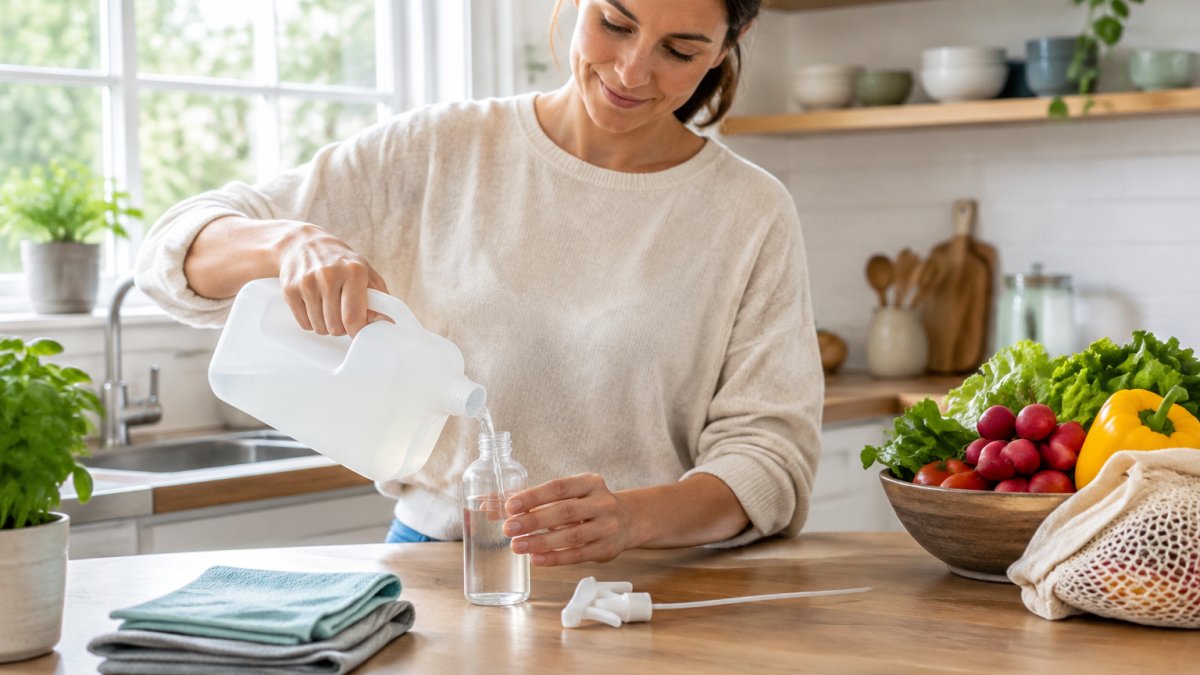
Reuse beats recycling here. A container you refill many times keeps plastic out of the waste stream far longer than one you recycle once. The environmental impact adds up across a household over a year, one bottle at a time.
Build Your Refill Starter Setup with Beyond Clean
Our recommendation is to start with the system, not a single bottle. The Hand & Face Defense+ Refill + Atomizer bundle at $34.99 pairs the reusable atomizer with the Hand & Face Defense+ formula. If you already own an atomizer, the Hand & Face Defense+ refill at $39.99 restocks it. For a ready-made option that travels well, the Hand & Face Rescue Kit at $49.99 gives you a refillable micro-mist device with over 200 sprays per fill.
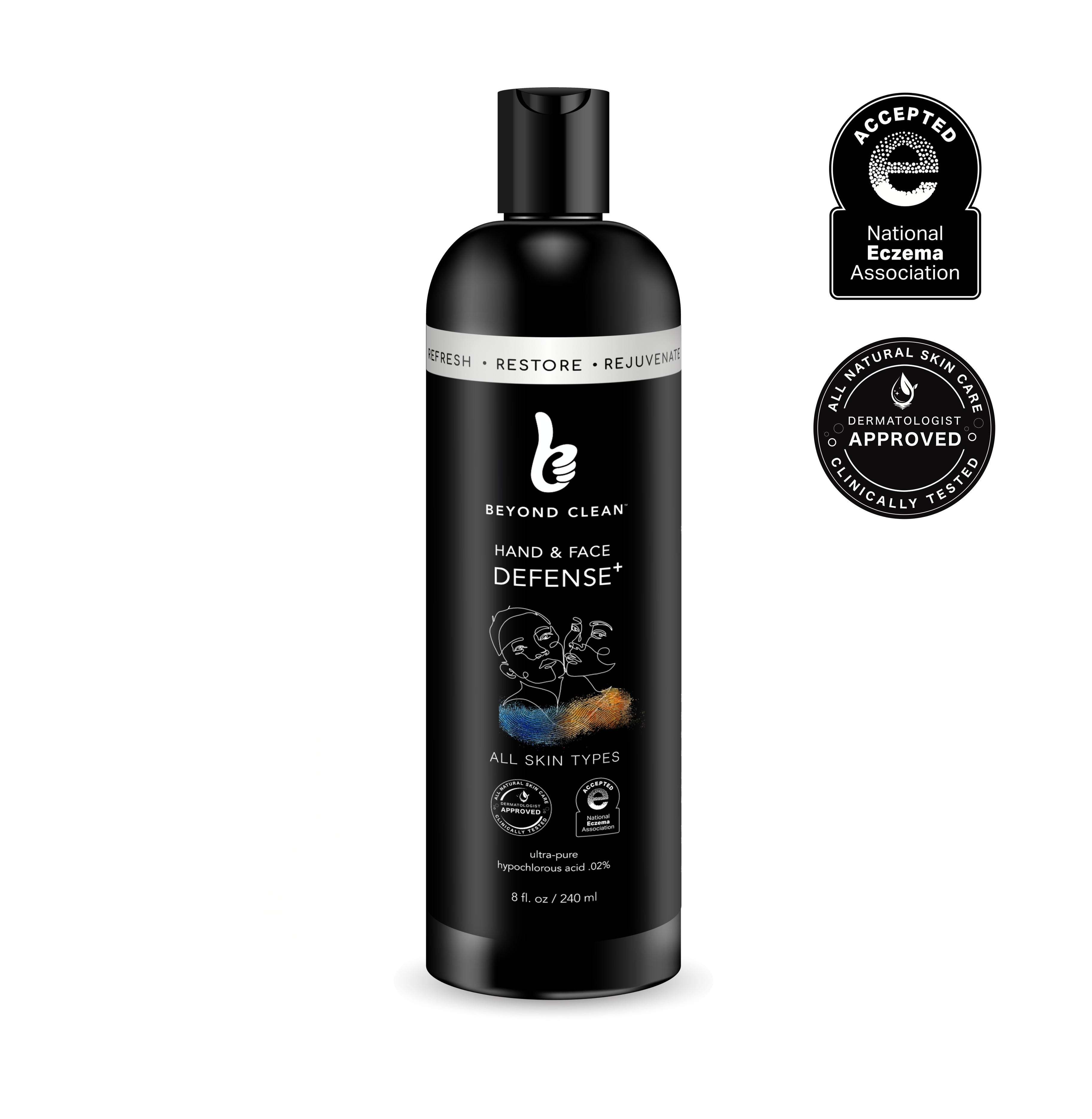
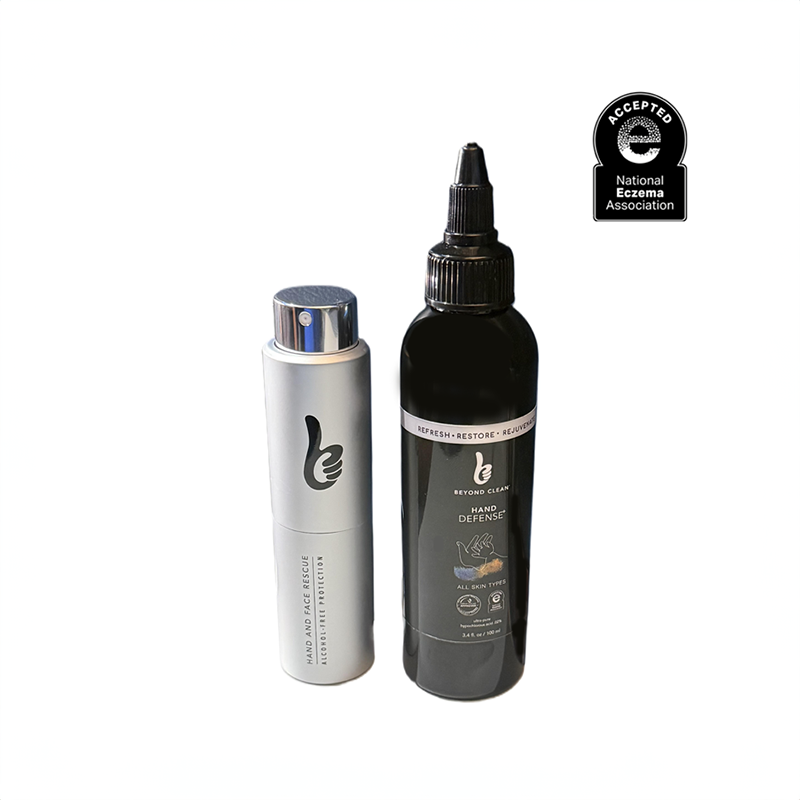
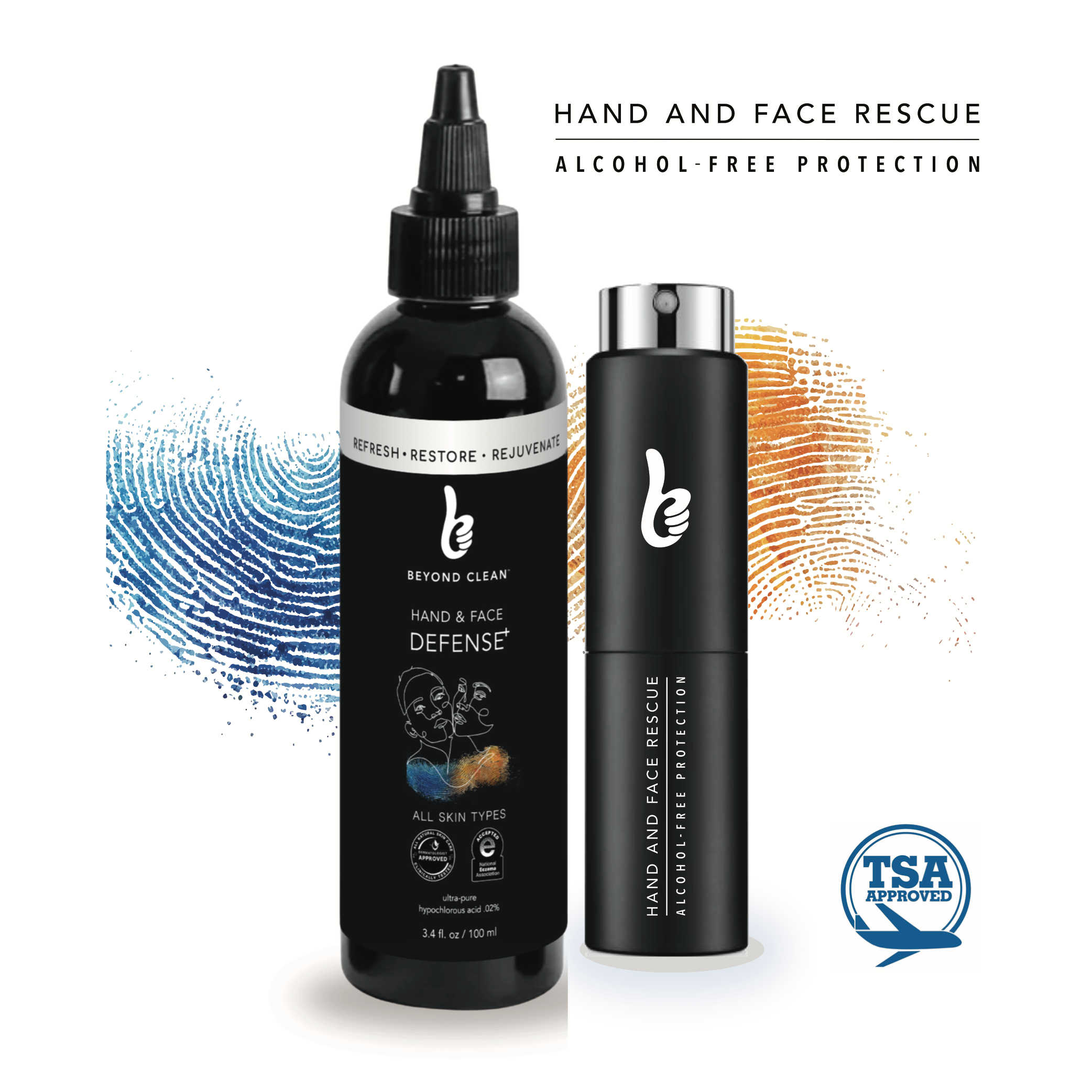
Each option is built around the same idea: buy the dispenser once, refill it again and again, and cut the single-use plastic that comes with bottled hygiene.
The upfront cost of refillable hygiene is the honest hurdle, and the long-term savings are the payoff. If you want a system designed for reuse from the start, Beyond Clean offers dermatologist-approved, fragrance-free HOCl formulas in a refillable atomizer built to cut single-use plastic. Get started with Beyond Clean and build a refill setup that pays you back over time.
Frequently Asked Questions
Are refillable hygiene products cheaper than single-use products?
It depends on how often you use them. A refillable system carries a higher upfront cost: Beyond Clean's Hand & Face Defense+ Refill is $39.99 for 8 oz, and the Refill + Atomizer set is $34.99. The savings come from reusing the atomizer instead of buying new spray bottles repeatedly. Compare cost per use, not sticker price.
How much plastic can refillable hygiene products help reduce?
Every refill you buy instead of a new bottle keeps one container out of the waste stream. Refilling the same atomizer instead of buying new bottles reduces the number of containers you throw away over time. The exact reduction depends on your usage, but the principle holds: one durable container plus refills produces less single-use packaging waste than buying new bottles each time.
What are the pros and cons of refillable hygiene systems?
Pros: lower packaging waste, long-term cost savings, and formulas you can choose for sensitive skin, like fragrance-free hypochlorous acid options. Cons: higher upfront cost, the need to clean and maintain the container, and reliance on buying refills regularly. The system works best for people who use hygiene products daily and want to cut single-use plastic without giving up effectiveness.
Are refillable cleaning products as effective as regular products?
Effectiveness comes from the formula, not the container. Beyond Clean's Hand & Face Defense+ is powered by hypochlorous acid (HOCl) and is dermatologist tested and approved. The refillable atomizer is designed to be refilled rather than discarded. Check the formula and certifications rather than assuming refillable means weaker.


