

Last Updated: November 21, 2026
Quick Summary
Safe cleaning products for pregnancy are lower-risk when they produce few fumes, limit skin contact, and are used exactly as directed. Choose fragrance-free formulas, ventilate rooms, wear gloves for anything stronger than soap and water, and delegate heavy-duty jobs like oven and drain cleaning to another adult.
- Risk comes from exposure, not from a single scary-sounding ingredient on a label.
- Never mix bleach with ammonia or vinegar, as the reaction releases dangerous gases.
- Open a window or run the exhaust fan before cleaning a bathroom.
- Flush eye contact with lukewarm water for at least 15 minutes, then call Poison Control at 1-800-222-1222.
- Keep product labels on bottles instead of transferring cleaners into unmarked containers.
Table of Contents
- What Makes a Cleaning Product Safe During Pregnancy
- List of Cleaning Products to Avoid While Pregnant
- Pregnancy Safe Disinfectant Spray: What to Look For
- An All-Purpose Cleaner Safe for Pregnancy
- Pregnancy Safe Bathroom Cleaner for Toilets, Tubs, and Tile
- Ventilation, Gloves, and Reducing Fumes at Home
- Building a Low-Exposure Cleaning Routine With Beyond Clean
- Frequently Asked Questions
What Makes a Cleaning Product Safe During Pregnancy
Not every household cleaner needs to leave your home. Hypochlorous acid is one option worth understanding, and this guide will walk you through what actually matters room by room. Delivering What Matters explains why HOCl is considered a gentler, low-exposure cleaning ingredient. (Source: American College of Obstetricians and Gynecologists guidance on environmental exposures)
A cleaning product is considered lower-risk during pregnancy when it produces few fumes, limits skin contact, and is used exactly as directed. The American College of Obstetricians and Gynecologists guidance on environmental exposures points to ventilation and reduced chemical contact as the core precautions.
Exposure Matters More Than the Label
A product that sits sealed under the sink is harmless. The same product becomes a concern when you spray it in a small bathroom with the door closed, breathe the mist, and wipe it up with bare hands. Dose, duration, and airflow decide the outcome.
Three factors drive exposure:
- Route: inhalation of vapors and mist, or skin contact
- Concentration: ready-to-use versus concentrated formulas you dilute
- Setting: a ventilated kitchen versus a windowless bathroom
A common mistake is treating "natural" as a safety guarantee.
Reading Product Labels and Ingredient Disclosure
Read the label before you read anything else online. The front panel sells; the back panel informs.
Look for the signal words required on household products, such as "caution," "warning," or "danger," and note whether the label tells you to wear gloves or open a window. Those instructions exist because the manufacturer expects meaningful exposure without them. Fragrance-free and lower-odor formulas are a practical starting point for anyone sensitive to fumes.
List of Cleaning Products to Avoid While Pregnant
The list of cleaning products to avoid while pregnant is shorter than most people expect, and it centers on strong fumes and caustic formulas rather than everyday soap.
| Ingredient or product type | Why it is a concern | Exposure route | Practical guidance |
|---|---|---|---|
| Bleach (sodium hypochlorite) | Splash risk to eyes and skin; fumes can irritate airways, especially in small rooms | Skin, eyes, inhalation | Use diluted per label, ventilate, wear gloves; never mix with ammonia or acids |
| Ammonia-based glass and floor cleaners | Strong vapor irritant; can trigger coughing or headache in poorly ventilated spaces | Inhalation | Delegate or use only with windows open and a fan running |
| Oven cleaners (sodium hydroxide or potassium hydroxide) | Caustic; causes chemical burns on skin and eyes; heavy fumes during use | Skin, eyes, inhalation | Hand off to another adult; if you must, wear long gloves and ventilate aggressively |
| Drain openers (sulfuric acid or lye) | Among the most corrosive products in the home; splash risk is serious | Skin, eyes | Delegate entirely; use a plunger or call a professional instead |
| Aerosol air fresheners and heavy fragrance sprays | Fine mist stays airborne; fragrance mixtures can irritate airways and trigger sensitivity | Inhalation | Choose fragrance-free or ventilate; avoid spraying near your face |
| Mold and mildew removers | Often combine bleach or strong surfactants with fumes; small bathrooms concentrate exposure | Inhalation, skin | Ventilate first, wear gloves, consider delegating |
| Heavy-duty degreasers | Solvent-heavy formulas with strong vapors; skin irritation common | Inhalation, skin | Use only as labeled, with gloves and airflow |
Never mix bleach with ammonia or with vinegar. The reaction releases gases that are dangerous for anyone in the room, pregnant or not.
Watch out: "natural" is not a safety guarantee. Vinegar and lemon juice are low-risk, but they are not disinfectants, and over-relying on them during flu season has its own tradeoffs.
Pregnancy Safe Disinfectant Spray: What to Look For
A pregnancy safe disinfectant spray should disinfect without filling the room with fumes, and hypochlorous acid-based formulas are a strong fit.
Disinfection Versus Routine Cleaning
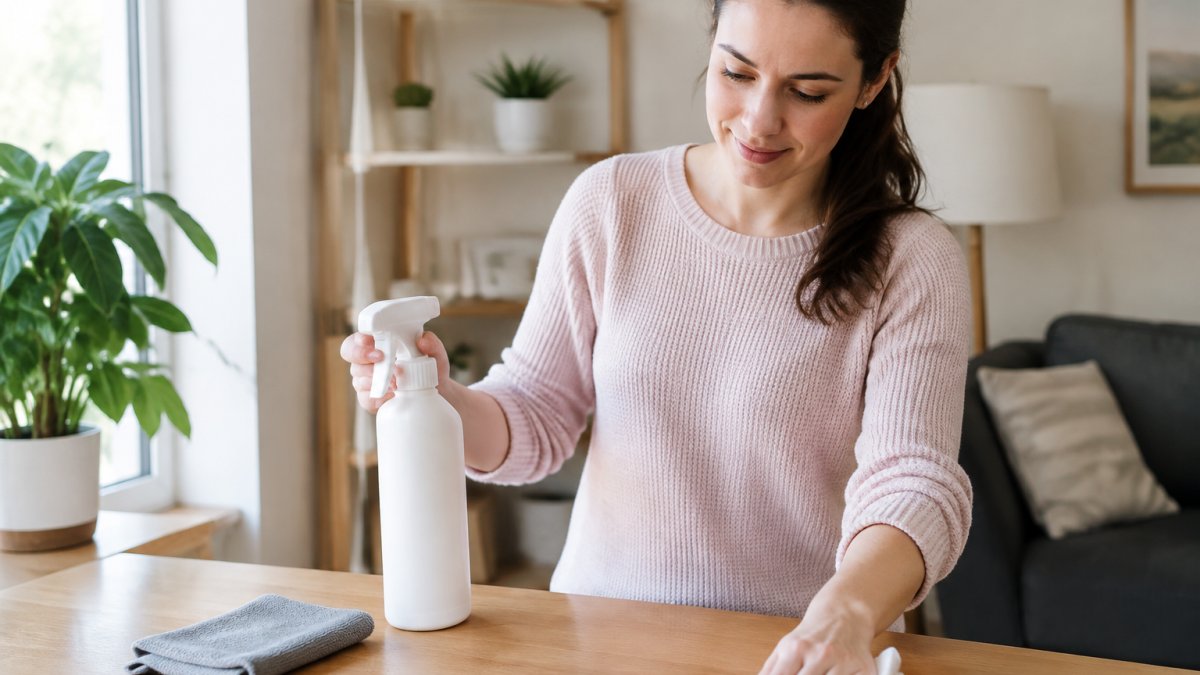
Routine cleaning removes soil and most germs with soap and water. Disinfection goes further, killing a labeled percentage of pathogens on a surface. You do not need disinfection on every counter, every day; save it for high-touch spots, food-prep areas, and illness in the house.
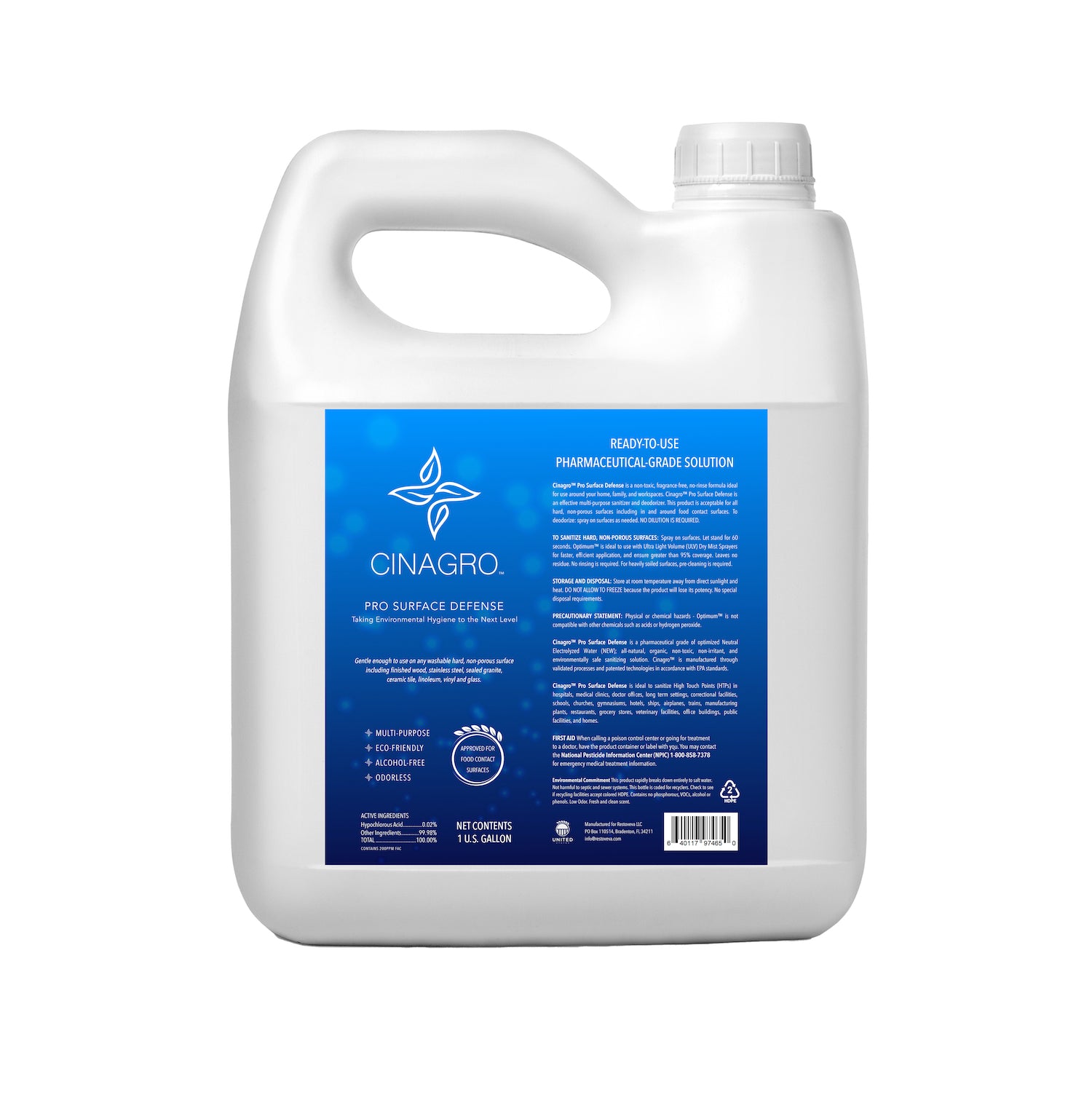
For a concrete option that matches these criteria, our HOCl-based surface solution sanitizes, disinfects, and deodorizes in one step and is listed as non-toxic and non-irritating.
An All-Purpose Cleaner Safe for Pregnancy
An all-purpose cleaner safe for pregnancy is one you can use daily without worrying about fumes or residue on food surfaces.
For most kitchen and living-area surfaces, a fragrance-free formula applied to a cloth rather than sprayed into the air keeps exposure low. If you want to compare more non-toxic options before deciding, this roundup of non-toxic kitchen surface cleaners covers the tradeoffs.
Pregnancy Safe Bathroom Cleaner for Toilets, Tubs, and Tile
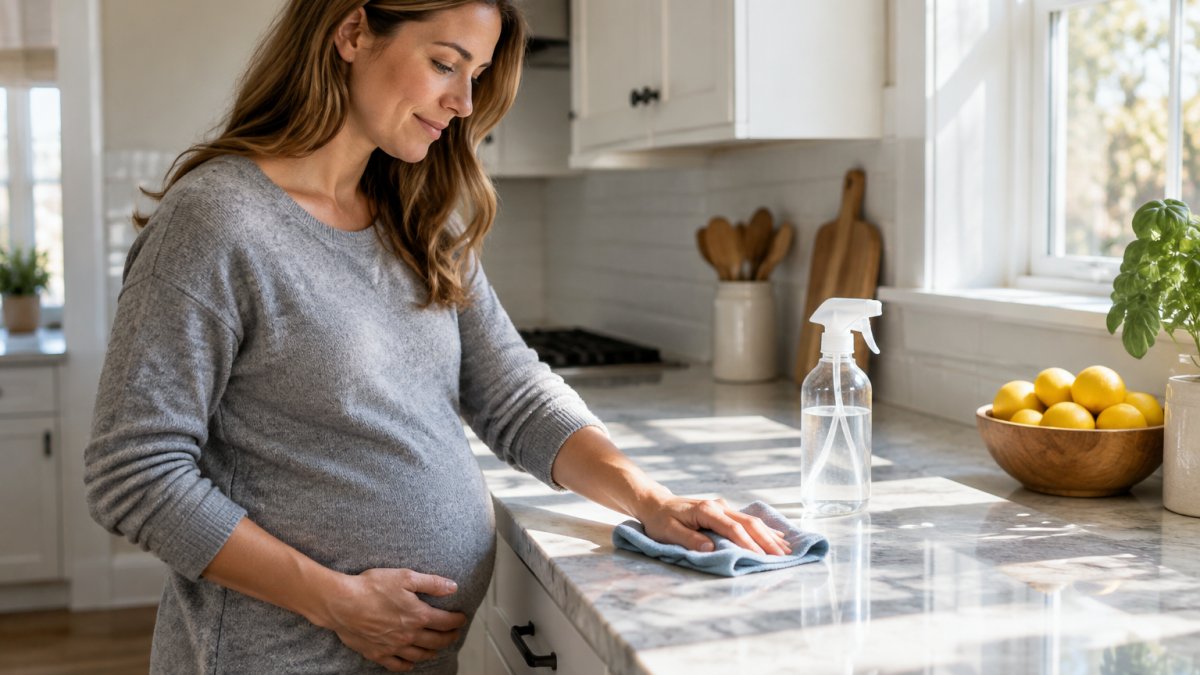
A pregnancy safe bathroom cleaner needs to handle mildew and bacteria without the vapor load of bleach or ammonia. Bathrooms are the worst room in the house for fumes: small, often windowless, and usually cleaned in a hurry.
Our approach, in order:
- Open a window or run the exhaust fan before you start.
- Apply the cleaner to a cloth or directly to the surface, not into the air.
- Let it sit for the labeled contact time, then wipe.
- Wear gloves if the label calls for them, and wash hands after. (Source: Environmental Protection Agency's guidance on household chemical safety)
Watch out: scrubbing a tub in a closed bathroom with a strong cleaner is the single most common way people overexpose themselves. Ventilate first, always.
Ventilation, Gloves, and Reducing Fumes at Home
Ventilation and gloves do more for your safety than switching brands. Airflow dilutes vapors before you breathe them, and gloves stop skin contact entirely.
Practical habits that work:
- Open windows and run fans before, during, and after cleaning
- Wear gloves for anything stronger than soap and water
- Choose fragrance-free and lower-odor products
- Clean in short sessions rather than marathon deep cleans
- Step out of the room while a product sits on the surface
Building a Low-Exposure Cleaning Routine With Beyond Clean
A low-exposure routine beats a perfect product list, because habits are what you actually repeat.
Here is the routine we would build:
- Daily: fragrance-free surface wipe on counters and handles
- Weekly: bathroom and floor cleaning, ventilated, with gloves
- Occasional: oven, drain, and mold work, handed to someone else
A checklist to keep on the fridge:
- Windows open before spraying
- Gloves on for anything beyond soap and water
- Product used at labeled dilution, never stronger
- No mixing, ever
- Heavy-duty tasks delegated
Beyond Clean's home essentials feature a refillable atomizer system with fragrance-free, alcohol-free HOCl formulas that are clinically tested and dermatologist approved.
Cleaning during pregnancy does not require a cabinet full of harsh chemicals. It requires the right products, decent airflow, and the discipline to hand off the jobs that genuinely need industrial strength.
Frequently Asked Questions
What are safe cleaning products to use while pregnant?
Plain soap and water, baking soda, and diluted white vinegar handle most routine surface cleaning with minimal fumes. For disinfection, look for fragrance-free, lower-odor products with clear ingredient disclosure, and use them only where needed. Wear gloves, open a window, and follow the label dilution and contact-time directions. Heavy-duty cleaners, bleach, ammonia, and aerosol products are best delegated or avoided, and check with your healthcare provider before using any strong chemical.
What cleaning products shouldn't you use when pregnant?
Avoid oven cleaners, drain openers, mold and mildew removers, and anything labeled heavy-duty or containing bleach or ammonia where possible. Never mix bleach with ammonia or vinegar, since that releases irritating gases. Aerosol sprays, air fresheners, and heavily fragranced products add fumes you do not need. If a task requires a strong chemical, ask someone else to do it or leave the area while it is applied, then ventilate thoroughly before returning.
Are pregnancy safe disinfectant sprays really effective against germs?
Yes, when used as directed. Effectiveness depends on the product's contact time, the surface, and whether you pre-clean visible dirt. Hypochlorous acid-based options such as Cinagro Pro Surface Defense ($34.99) are listed as broad-spectrum sanitizers that eradicate 99.99% of bacteria, fungi, and viruses, and the listing describes the formula as non-toxic, non-irritating, and hypoallergenic with no PPE required for handling. Always read the label for the surfaces and contact time it is approved for.
What should I do if I breathe in strong cleaning fumes while pregnant?
Move to fresh air right away, open windows and doors, and sit down to rest. If you feel dizzy, short of breath, or have a headache that does not ease, call your healthcare provider or Poison Control at 1-800-222-1222. For skin contact, rinse with lukewarm water for several minutes. Keep the product container so you can read the label to your provider, and do not return to the room until the odor has cleared.


