

Last Updated: October 31, 2026
Quick Summary
To use hypochlorous acid for skin care, mist it onto clean, bare skin, let it air dry for about 30 seconds, then follow with moisturizer if needed. Reapply up to a few times daily, and avoid spraying over thick creams so it can reach the skin directly.
- Hold the bottle 15-20 cm from your face or hands when misting.
- Don't wipe the spray off immediately, or you remove it before it works.
- Hypochlorous acid for acne is a supporting step, not a cure.
- Choose products with a stated concentration and pH near skin's acidic range.
- Keep bottles sealed and away from direct sun and heat to preserve potency.
Table of Contents
- What Hypochlorous Acid Is and Why Skin Needs It
- How to Use Hypochlorous Acid Spray in Your Routine
- Hypochlorous Acid for Acne and Blemish-Prone Skin
- Soothing Redness, Eczema, and Sensitive Skin
- Hypochlorous Acid Side Effects and What to Watch For
- Hypochlorous Acid and Pregnancy: What to Know
- Choosing a Hypochlorous Acid Product for Your Skin
- Add Hypochlorous Acid to Your Daily Skin Care
- Frequently Asked Questions
What Hypochlorous Acid Is and Why Skin Needs It
Hypochlorous acid for skin care starts with a molecule your body already makes. Hypochlorous acid (HOCl) is a naturally occurring antimicrobial compound produced by white blood cells as part of the immune system's first line of defense. At Beyond Clean, our products are built around this molecule.
Your skin produces HOCl too, in small amounts, to manage bacteria on its surface. The topical versions sold today mimic that molecule in a lab-stable form. That is why hypochlorous acid shows up in wound care settings, facial sprays, and daily cleansing routines.
How HOCl Works on Skin
HOCl works by disrupting the cell walls of bacteria, viruses, and fungi on contact. It oxidizes proteins on the pathogen's surface, which stops the organism from functioning. Human skin cells tolerate this because HOCl is short-lived and breaks down into salt and water.
The practical result: you get antimicrobial action without alcohol or fragrance.
The CDC guidance on cleaning and disinfecting notes that hypochlorous solutions require proper concentration and contact time to work, so formulation quality matters.
How to Use Hypochlorous Acid Spray in Your Routine
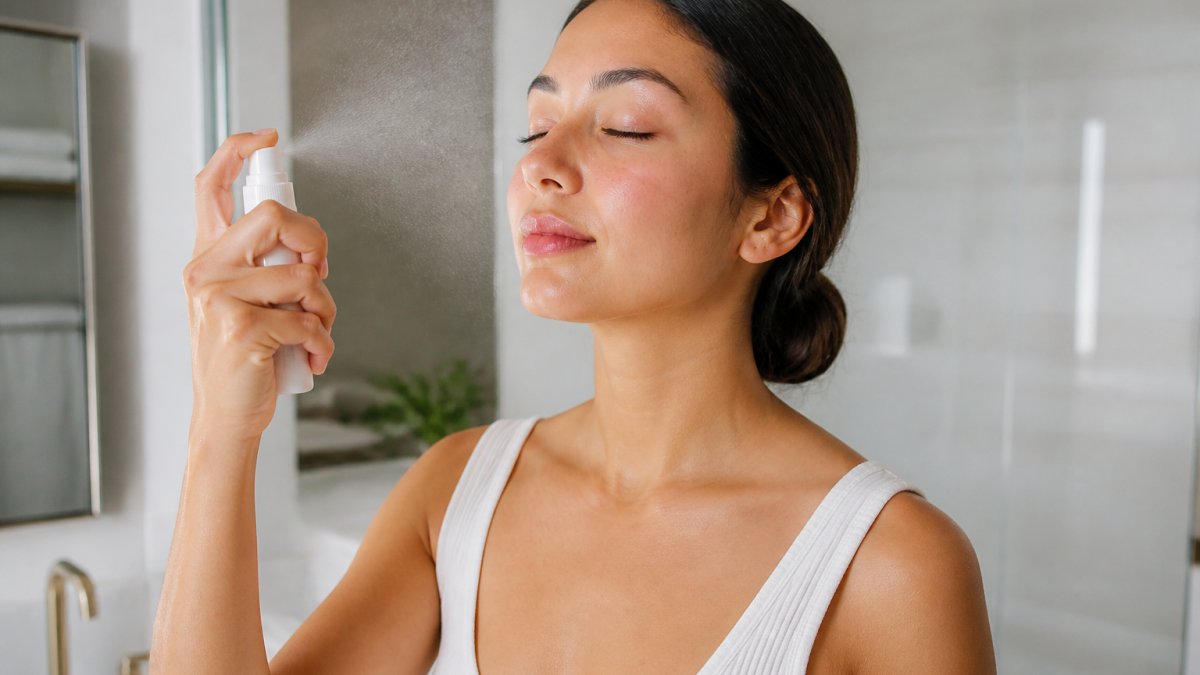
Using hypochlorous acid spray is simple: mist it onto clean or bare skin, let it air dry, and follow with moisturizer if needed.
Step-by-Step Application
- Wash your hands and start with skin that is clean or free of heavy makeup.
- Hold the bottle 15-20 cm from your face or hands.
- Mist evenly over the treatment area with eyes closed.
- Let the skin air dry for about 30 seconds.
- Follow with serum or moisturizer if your routine includes one.
- Reapply as needed, up to a few times daily.
A common mistake is spraying over thick creams. HOCl works best on bare skin, where it can reach the surface directly.
Watch out: don't wipe the spray off immediately. You remove the product before it has done its job.
Hypochlorous Acid for Acne and Blemish-Prone Skin
Hypochlorous acid for acne is a supporting step, not a cure.
For a daily hand and face option, Hand and Face Defense+ is a product from our line. It is fragrance-free, dermatologist approved, and approved by the National Eczema Association.

Think of it as an antimicrobial layer that sits alongside the rest of your routine.
Soothing Redness, Eczema, and Sensitive Skin
Our formulas are fragrance-free and alcohol-free.
The National Eczema Association maintains a seal of acceptance for products that meet its criteria, which is a useful filter when you are comparing labels.
Our formulas carry that acceptance, and we lean on it because "gentle" is a word every brand uses. A third-party seal is harder to fake. Redness and inflammation relief tend to show up as reduced reactivity over consistent use, not overnight.
Hypochlorous Acid Side Effects and What to Watch For
Hypochlorous acid side effects are uncommon, but the useful question is not just "is it safe?", it is "safe for which use, on which skin, and when should I stop?"
Routine cosmetic use vs. care that needs a clinician
A facial mist used on intact skin is a cosmetic step. Persistent or cystic acne, eczema flares that are spreading or weeping, signs of infection (increasing redness, warmth, swelling, pus, fever), and wounds that are deep, dirty, or slow to heal are medical issues. A topical antimicrobial spray is not a substitute for assessment and treatment of those conditions. Stop use and check with a clinician if you notice swelling, a spreading rash, worsening irritation, or any sign of infection.
Eyes, children, and pregnancy
Sprays are not interchangeable, so follow the product label rather than assuming one bottle fits every situation. Around the eyes, close them during misting and avoid directing spray at the lash line; do not use a product labeled for body or surfaces near the eyes. For children, use only products whose label states they are intended for that age group, and patch-test first. During pregnancy and breastfeeding, check with your obstetric or pediatric provider before adding any new product, and avoid the nipple area during breastfeeding unless a clinician approves it.
Patch-test and storage habits that prevent problems
Storage matters for potency: keep bottles sealed and away from direct sun and heat, and replace the product per the label's shelf-life guidance.
Hypochlorous Acid and Pregnancy: What to Know
Pregnancy is a time to check with your obstetric provider before adding any new product.
Consider patch-testing on the inner forearm first. Avoid use on the nipple area during breastfeeding unless your clinician approves it.
Choosing a Hypochlorous Acid Product for Your Skin
Choosing well comes down to reading the label like a formulator, not a shopper. Four things matter most: stated concentration, pH, packaging and stability, and third-party verification. Most guides wave at these; here is what the numbers and claims actually mean.
Concentration: match the number to the intended use
Hypochlorous acid products are not interchangeable. A spray formulated for wound cleansing, a facial mist, and a surface disinfectant can all say "hypochlorous acid" while sitting at very different strengths. The label should state the active concentration, typically expressed in parts per million (ppm) or as a percentage, and the intended use should match it. A product marketed for hard-surface disinfection is not automatically appropriate for facial skin, even if the molecule is the same. If no number appears on the label, treat that as a red flag: you cannot compare products, judge contact time, or predict how your skin will respond.
pH: the stability lever most labels hide
HOCl is only stable within a narrow acidic range; as pH rises, the molecule shifts toward less active forms and potency drops. That is why a well-made product states or implies a pH near skin's natural acidic range rather than a vague "balanced" claim. pH also affects comfort, a formula outside the skin-friendly range can sting or disrupt the barrier over time. When a brand publishes its pH, that is a signal it is managing stability, not just marketing a molecule.
Formulation and storage: potency fades quietly
Hypochlorous acid degrades with exposure to light, heat, and air. Light-blocking, well-sealed packaging preserves potency; clear bottles and wide-mouth jars let it fade. Storage follows the same logic: keep bottles closed, out of direct sun, and away from hot bathrooms or car interiors. A degraded spray loses strength without changing smell or appearance, so you cannot tell by looking. Buy sizes you will finish within the product's stated shelf life, and check for a use-by or period-after-opening date.
Label literacy: what claims do and do not tell you
"Medical grade," "sterile," and "clinical strength" are marketing phrases, not regulated guarantees of suitability for your skin. What you can verify: a stated active concentration, a stated or implied pH, a full ingredient list (fragrance-free and dye-free matter for sensitive skin), light-blocking packaging, and independent seals such as the National Eczema Association Seal of Acceptance for products intended for eczema-prone skin. A third-party seal is harder to fake than an adjective.
| What to Check | Why It Matters | Red Flag |
|---|---|---|
| Stated concentration (ppm or %) | Determines strength, contact time, and intended use | No number on label |
| pH near skin's acidic range | Keeps HOCl stable and comfortable | Vague "balanced" claim |
| Light-blocking, sealed bottle | Preserves potency over shelf life | Clear, wide-mouth jar |
| Fragrance-free, dye-free | Avoids common irritants | Added "natural" scents |
| Intended-use statement | Separates skin products from surface disinfectants | Disinfectant sold as facial mist |
| Third-party seal | Verifies testing claims | Self-declared only |
Hand and Face Defense+ is our hand and face product for daily use, featuring a refillable atomizer and dermatologist approval.

Add Hypochlorous Acid to Your Daily Skin Care
Building hypochlorous acid into your daily skin care takes about a minute. Morning: mist after cleansing, let dry, then follow with your routine.
For a complete start, the Hand & Face Rescue Kit pairs a refillable atomizer with our Hand & Face Defense+ formula.

A common mistake is treating HOCl as a replacement for everything else. It is not. It sits alongside your cleanser, moisturizer, and treatments as a calming antimicrobial layer.
Frequently Asked Questions
Is hypochlorous acid safe to use on skin every day?
Follow the product label for directions. If you have reactive skin, patch-test first and check with a dermatologist if redness, stinging, or dryness appears.
Can hypochlorous acid help with acne and redness?
For persistent breakouts or cystic acne, a dermatologist can recommend appropriate treatments.
Is hypochlorous acid spray safe during pregnancy?
Always confirm with your obstetrician or dermatologist before adding any new product to your routine during pregnancy.
What should you not mix with hypochlorous acid?
Keep it away from bleach and other household cleaners, and use it within the product's stated shelf life.
Most people want protection that does not cost them their skin barrier. That is exactly the balance we build for at Beyond Clean: fragrance-free HOCl formulas, a refillable atomizer that cuts single-use plastic, and third-party eczema certification behind the gentleness claims. Get started with Beyond Clean and add a calm, effective layer to your daily routine.


