

Table of Contents
- Start With a Home Plastic Audit
- How to Reduce Plastic Waste Step 1: Ditch Single-Use Plastics in Daily Routines
- Step 2: Shop Smarter to Cut Packaging Waste
- Step 3: Master Proper Recycling Techniques
- The Benefits of Refillable Cleaning Products for Your Home
- Non-Toxic Cleaning Alternatives That Cut Plastic and Chemicals
- How to Live Plastic-Free Beyond the Obvious Swaps
- Common Mistakes to Avoid When Reducing Plastic Waste
- Frequently Asked Questions
Last Updated: September 11, 2026
Start With a Home Plastic Audit
Most people trying to reduce plastic waste skip the step that makes every other change stick: knowing where their plastic actually comes from. A home plastic audit is a room-by-room count of what you throw away in a typical week, about 30 minutes that turns a vague goal into a specific list.
To run one, collect a week's worth of plastic packaging and single-use items from your kitchen, bathroom, laundry, and home office, then sort into food packaging, cleaning products, personal care, and misc. Start with the biggest pile.
What most guides miss is that the highest-volume category is rarely the most visible one. Reusable water bottles get the attention, but kitchen and bathroom packaging usually dominates the pile. This guide walks through seven steps that work, from the audit to habits that survive past week three.
How to Reduce Plastic Waste Step 1: Ditch Single-Use Plastics in Daily Routines
The fastest plastic reduction comes from replacing items you touch daily. One plastic water bottle a day is 365 a year; one reusable bottle replaces all of them.
Start with the four highest-frequency items:
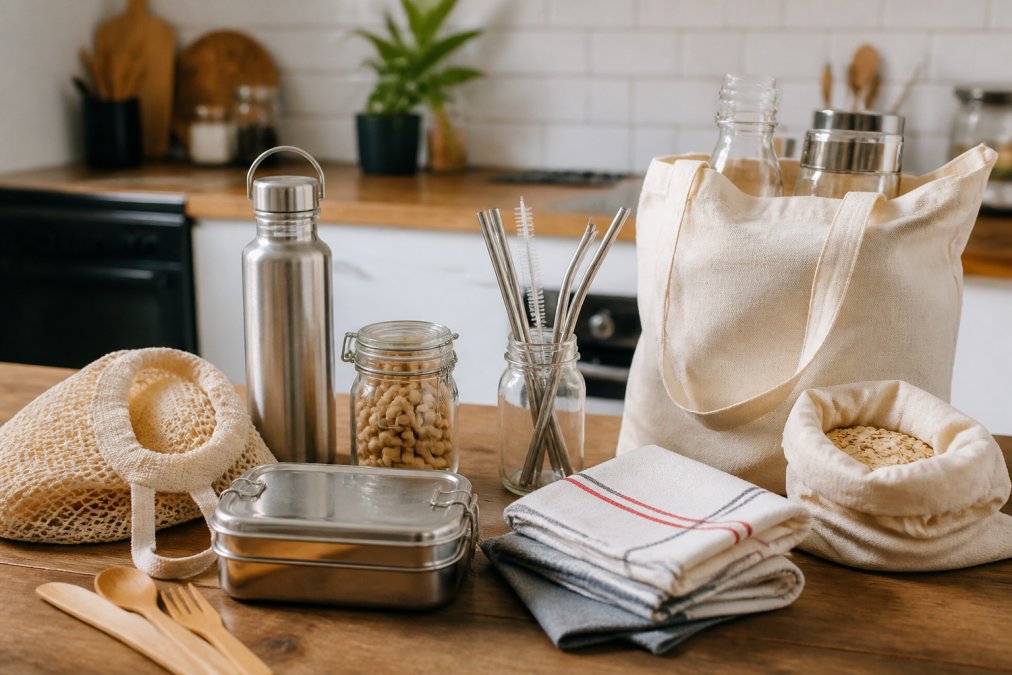
- Water bottles. Carry a reusable water bottle and refill it instead of buying bottled water.
- Coffee cups. Keep a travel mug in your bag or car so the disposable cup never gets ordered.
- Grocery bags. Store reusable bags in your trunk, not your closet, so they're there when you shop.
- Takeout containers. Ask restaurants to skip plastic cutlery and straws, or bring your own.
The trick is placement, not willpower. Put the reusable item where the disposable one used to live.
Kitchen and Bathroom Swaps That Stick
Kitchen and bathroom swaps fail when they create more work than the plastic version. Choose replacements that are easier to use, not just greener.
- Swap plastic wrap for beeswax wraps or glass containers with lids
- Replace plastic sponges with cellulose or loofah scrubbers
- Switch liquid hand soap in plastic pump bottles for bar soap or a refillable dispenser
- Trade plastic toothbrushes for bamboo handles with replaceable heads
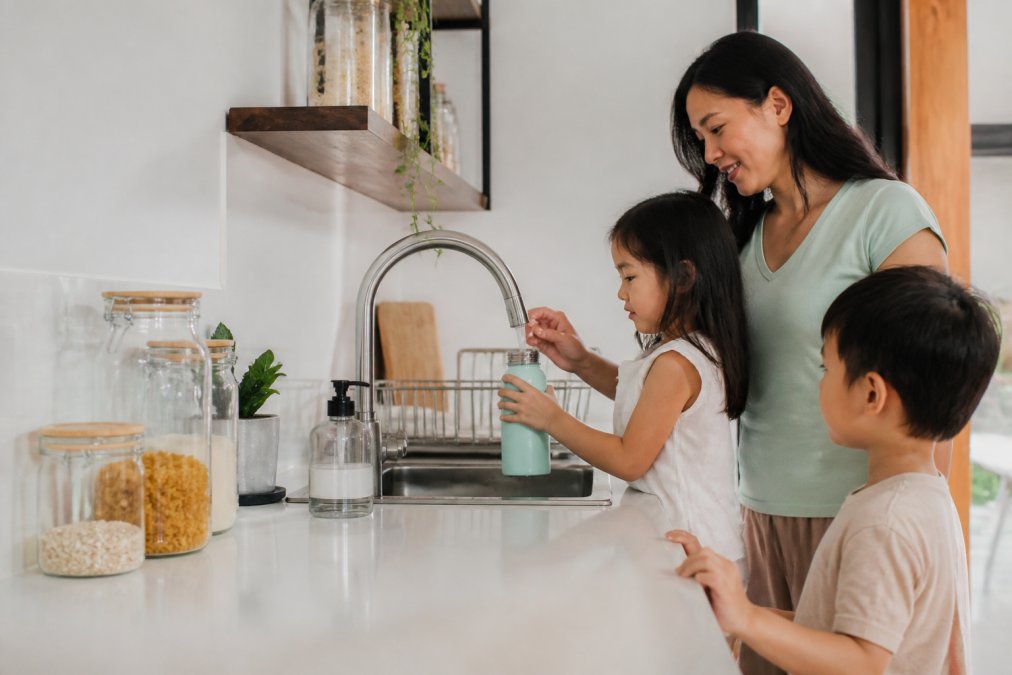
The refillable dispenser keeps paying off: buy the bottle once and refill it, removing a steady stream of plastic pump bottles from your waste.

Step 2: Shop Smarter to Cut Packaging Waste
Packaging waste is the largest single category of household plastic, and most of it is decided before you reach the checkout. Shopping habits, not products, drive it, and the highest-impact changes are also the cheapest, because you buy less packaging rather than premium alternatives.
Three changes cut the most packaging:
- Buy loose produce instead of pre-bagged or shrink-wrapped items. Loose apples, peppers, and potatoes are usually priced the same or lower per pound, and you skip the film and tray entirely.
- Choose larger sizes over single-serve packs when storage allows. A large tub of yogurt or bulk bag of rice uses far less plastic per serving, and the unit price is almost always lower.
- Bring your own containers to bulk bins and deli counters where stores allow it. This eliminates the bag, box, and inner liner in one move.
A common mistake is buying "eco" products wrapped in plastic, a bamboo toothbrush in a plastic blister pack is not a win. Check the packaging, not just the label. A reusable mesh bag costs a few dollars once and replaces hundreds of thin produce bags.
The Budget Case for Buying Less Packaging
Plastic reduction has a reputation as an expensive hobby, but the moves that cut the most plastic also cut the most cost.
- Larger sizes lower the price per ounce while lowering packaging per ounce.
- Loose produce often costs less than pre-cut or pre-bagged versions, which carry a convenience premium.
- Bulk bins let you buy exactly the amount you need, so you waste less food and less packaging at the same time.
- Refilling a durable container costs less per use than rebuying a new bottle every time.
- Buying used, furniture, tools, kitchenware, skips retail packaging entirely and usually costs a fraction of new.
Households that stick with this long-term find their grocery bill does not go up: they shift spending from packaging and single-serve convenience toward larger formats and refills, and the plastic reduction comes along for free.
Bulk Shopping and Refillable Options
Bulk shopping and refillable options attack packaging at the source. Bulk bins let you buy grains, nuts, and spices in your own bags or jars, eliminating the bag, box, and inner liner in one move.
For cleaning and personal care, refillable systems work the same way. You buy a durable container once, then refill it from a larger or concentrated supply. The U.S. Environmental Protection Agency's guidance on reducing waste at home outlines how source reduction, cutting waste before it's created, outperforms recycling for environmental impact.

Reading Packaging Labels Without Getting Fooled
"Recyclable" means the material can theoretically be recycled somewhere, not that your local program accepts it. "Made with recycled content" says nothing about whether the package is recyclable, and "biodegradable" plastics often only break down in industrial composting facilities most households cannot access.
The practical test is simpler: can you buy this item with less packaging, or in a container you can refill? If yes, that beats any label claim. If no, buy the largest size you will actually use. Perfect is not the goal, less is.
Step 3: Master Proper Recycling Techniques
Recycling only works when the material is clean and accepted by your local program. Contamination, non-recyclable or dirty items mixed in, is the biggest reason recyclable material ends up in landfills.
Follow these rules:
- Rinse containers so no food residue remains
- Leave lids on plastic bottles where your program accepts them
- Never bag your recyclables; loose items sort better
- Check your local program's accepted list, since it varies by area
When in doubt, throw it out. A single contaminated item can spoil a whole batch.
Avoiding Recycling Contamination
Contamination happens when people "wishcycle," tossing items they hope are recyclable. The most common offenders are greasy pizza boxes, plastic bags, and shredded paper. Keep a small bin next to your recycling for unsure items and check them against your program's list weekly to keep your stream clean and actually recyclable.
The Benefits of Refillable Cleaning Products for Your Home
Refillable cleaning products cut plastic at the point of highest volume. Cleaning supplies generate a steady stream of bottles; a refillable system replaces that with one durable container plus refills.
The benefits go beyond plastic:
- Less packaging waste from repeated bottle purchases
- Lower cost per use over time, since you refill instead of rebuying
- Fewer harsh chemicals when you choose non-toxic formulas
- Less storage clutter, since refills take up less space than full bottles
For families, the refillable model fits how cleaning actually happens: you use the same spray bottle daily and just top it up. Beyond Clean built its atomizer system around this idea, pairing a reusable spray device with refills of its hypochlorous acid formula so the bottle stays and only the liquid gets replaced.
Non-Toxic Cleaning Alternatives That Cut Plastic and Chemicals
Non-toxic cleaning alternatives reduce both plastic waste and chemical exposure, which matters most in homes with young children. Conventional cleaners rely on harsh ingredients; non-toxic options use gentler actives that break down after use. minimize construction waste.
Common alternatives include:
- Vinegar and water for glass and light grease
- Baking soda as a scouring powder in a refillable shaker
- Castile soap diluted for general surface cleaning
- Hypochlorous acid (HOCl) formulas for germ protection without alcohol or fragrance
Hypochlorous acid is a naturally occurring compound that fights germs then breaks down into harmless components. Formulas like Beyond Clean's Hand & Face Defense+ are fragrance-free, alcohol-free, and dermatologist-tested, making them usable on skin and surfaces alike.

The U.S. Food and Drug Administration's guidance on food-contact surface safety is worth checking before choosing any cleaner you'll use near food prep areas. Look for formulas labeled food-safe and free of fragrance.
How to Live Plastic-Free Beyond the Obvious Swaps
Living plastic-free means looking past the kitchen and bathroom to plastic hiding in less obvious places. Two areas trip up even committed reducers: microbeads and synthetic fibers, and the plastic embedded in digital and tech consumption. Most guides stop at straws and bags, which is why these categories stay invisible.
Tackling Microbeads and Synthetic Fibers
Microbeads are tiny plastic particles in some exfoliating scrubs and toothpastes that wash straight down the drain into waterways. Synthetic fibers shed from polyester, nylon, and acrylic clothing every time you do laundry. Both are plastic pollution you never see leave your home.
To cut both:
- Check labels and avoid products listing polyethylene or polypropylene beads
- Choose natural exfoliants like oatmeal or sugar
- Wash synthetic clothing less often and use a microfiber-catching laundry bag
- Air-dry synthetic fabrics to reduce fiber shedding
- Run full loads on a shorter, cooler cycle, agitation time, not water volume, drives most fiber release
Microbeads and fibers are too small for wastewater treatment plants to filter reliably, so they bypass recycling entirely and accumulate in sediment and aquatic life. That is why source reduction, not buying the product, not washing the garment as often, outperforms any downstream cleanup.
Plastic Waste in Digital and Tech Consumption
This is the category almost every plastic-reduction guide ignores, and one of the fastest-growing sources of household plastic waste. Every device, cable, and accessory arrives wrapped in plastic, and the upgrade cycle leaves a hidden footprint long after the packaging is gone.
Start by understanding where the plastic actually sits in tech consumption:
- Retail packaging. Chargers, earbuds, and small accessories typically ship in rigid plastic clamshells or blister packs that most curbside programs reject.
- Cables and connectors. Braided and PVC-jacketed cables are rarely recyclable and fail faster than the devices they serve, driving repeat purchases.
- Device housings and internals. Even when the outer shell is aluminum or glass, internal brackets, ribbon connectors, and speaker grilles are often plastic.
- Shipping materials. Padded mailers, air pillows, and shrink wrap from online orders add up faster than in-store purchases because each item ships separately.
The fix is buying less often and keeping gear longer:
- Repair devices instead of replacing them at the first slowdown. Battery replacements and port cleanings extend phone and laptop life by years in many cases.
- Buy refurbished electronics, which skip most retail packaging and reuse the original device rather than manufacturing a new one.
- Choose accessories with minimal or paper-based packaging, and prefer cables with replaceable or reinforced ends.
- Recycle old cables and devices through certified e-waste programs rather than curbside bins, which cannot process them.
- Consolidate online orders and choose plastic-free shipping options at checkout to reduce padded envelopes and air pillows.
A useful mental model: every tech purchase has two plastic footprints, the packaging you throw away in week one, and the device you eventually discard. The second is usually larger, which is why longevity beats any packaging swap.
Why the Lifecycle of Your Swaps Matters
Most plastic-reduction advice treats every non-plastic alternative as automatically better. That is not always true: bamboo, glass, and stainless steel carry their own manufacturing footprints, and a glass container that breaks in a month can be worse than the plastic one it replaced.
The practical rule: use what you already own until it wears out, then replace it with a durable option you will actually keep. A stainless steel bottle used daily for years beats a glass bottle replaced twice a year, and a refurbished laptop beats a new one even if the new one ships in recycled cardboard. Longevity, not material label, is the real measure.
This is where budget-conscious reducers have an advantage: the cheapest plastic-reduction moves, repairing, refilling, buying used, consolidating shipments, are also the lowest-waste ones. You do not need to spend money to cut plastic; you often need to spend less.
Common Mistakes to Avoid When Reducing Plastic Waste
The biggest mistake is going all-in at once. A total overhaul in week one usually collapses by week three. Pick one category, master it, then add the next.
Other mistakes that undercut progress:
- Buying new "eco" products to replace working ones. The greenest item is the one you already own. Use it up first.
- Assuming all plastic is recyclable. Check your local program; much of it isn't.
- Ignoring the refill math. Refillable systems save plastic and money over time, but only if you actually refill them.
- Forgetting the bathroom. Personal care and cleaning bottles are a top plastic source and the easiest to switch.
A common approach is to track one change per month and review your audit list quarterly. The U.S. Environmental Protection Agency's overview of municipal solid waste shows how much of household waste is packaging, which is why shopping and refill habits move the needle more than any single product swap.
Reducing plastic waste gets easier when the swap is built into your routine instead of bolted on. For families who want to cut single-use bottles without giving up effective germ protection, Beyond Clean offers a refillable atomizer system powered by hypochlorous acid, with dermatologist-tested, fragrance-free formulas safe for skin, surfaces, and kids. The Hand & Face Defense+ Refill + Atomizer (3.4/8 oz) and the Hand & Face Rescue Kit offer a reusable device you refill again and again. Get started with Beyond Clean and cut plastic waste while keeping your family protected.
Frequently Asked Questions
What are 5 simple ways to reduce plastic waste at home?
Start with a home plastic audit, then swap single-use items like water bottles and shopping bags for reusable versions. Buy in bulk to cut packaging, set up a refillable cleaning system, and learn your local recycling rules to avoid contamination. These five steps cover the biggest sources of household plastic waste and can be started this week without a big budget.
How can switching to refillable cleaning systems help the environment?
Refillable cleaning systems cut the number of plastic bottles you buy and throw away each year. A single refillable atomizer can replace dozens of disposable spray bottles, reducing packaging waste and landfill volume. Choosing non-toxic, biodegradable refills also lowers chemical runoff into waterways, so the environmental impact drops on two fronts: less plastic production and less pollution.
What are the benefits of using non-toxic, refillable hygiene products?
Non-toxic, refillable hygiene products protect your skin and the planet. They avoid harsh chemicals, alcohol, and synthetic fragrances that can irritate sensitive skin, making them safer for babies and people with eczema. Refillable formats reduce single-use plastic waste, and because you buy refills instead of new bottles, the cost per use often drops over time. Look for dermatologist-tested, fragrance-free options.
How does reducing single-use plastic impact ocean health?
Less single-use plastic means less plastic entering rivers and oceans, where it breaks into microplastics that harm marine life. Microplastics have been found in fish, sea salt, and drinking water. By cutting plastic at the source through reusable bottles, refillable cleaners, and better recycling habits, you reduce the volume of waste that can leak into waterways and contribute to the plastic crisis.


